
The Iowa Inmate Population
The clearest statewide count in the research is the Iowa Department of Corrections institutional count. IDOC Daily Statistics dated 07/05/2026 reported 8,925 people in Iowa correctional institutions. That count is the state-prison side of the Iowa inmate population, not a full count of every person in every county jail. County jails are local facilities. They hold people after arrest, before trial, for short sentences, for local holds, and in some counties under federal or immigration arrangements. The statewide site must therefore treat "Iowa inmate population" as a system of separate custody records rather than one single database.
IDOC also has a statewide role beyond operating prisons. The Iowa Department of Corrections oversees nine institutions, accredits and funds eight district correctional services departments, supervises community populations, and manages jail inspections. County sheriffs still run local jails, but IDOC standards and inspections sit above the jail layer. That structure is why a recent booking usually belongs in a county roster, while a sentenced prison case belongs in the IDOC offender search.
The Iowa Department of Corrections homepage is the main public entry point for IDOC programs, offender search, victim services, facilities, agency reports, and open-records access.
The homepage matters because it connects the prison, supervision, victim-notification, facility, and records-request paths that a single county roster cannot cover.
Iowa Inmate Population Statistics
The IDOC Daily Statistics page gives the strongest current snapshot for the state-prison population. On 07/05/2026, the institutional count was 8,925 against institutional capacity of 6,990, which IDOC listed as 27.68% overcrowded. The same daily page reported 733 females and 22 CCUSO pretrial. Those figures should not be mixed with county jail capacity because county jails are operated by local sheriffs and county boards.
| Measure | Figure | Source / Date |
|---|---|---|
| Institutional current count | 8,925 | IDOC Daily Statistics, 07/05/2026 |
| Institutional capacity | 6,990 | IDOC Daily Statistics, 07/05/2026 |
| Overcrowding | 27.68% | IDOC Daily Statistics, 07/05/2026 |
| Female institutional count | 733 | IDOC Daily Statistics, 07/05/2026 |
| Official IDOC institutions | 9 | IDOC Districts & Prisons |
The IDOC Daily Statistics page is the source for the current institutional count, capacity, and overcrowding figures used in the Iowa inmate population table.
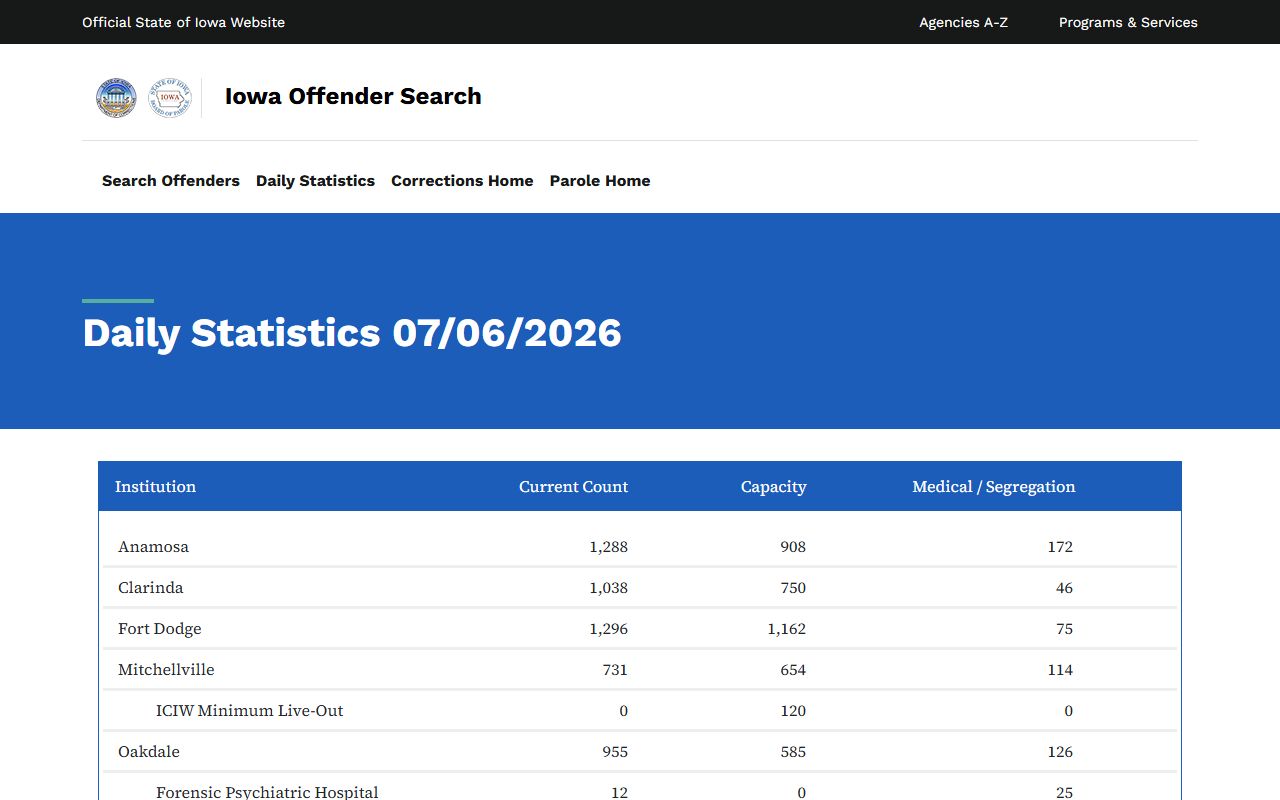
Daily statistics are especially useful when the question is not just where a person is held, but how full Iowa's prison system is on a specific reporting date.
Iowa Inmate Population Trends
The research supports a clear trend statement: the current IDOC institutional count is above the early-2020s and audited FY2023 levels, and state forecasting expects growth if law, admissions, and release patterns stay broadly the same. IDOC's public About material uses an approximate overview of about 8,200 people in nine institutions. The 2025 Iowa Auditor combined institution report cited an 8,104 average number of inmates for the year ended June 30, 2023. USAFacts and BJS reported about 8.83K Iowa state prisoners at December 31, 2023, up 4.2% from 2022. By 07/05/2026, the IDOC daily count was 8,925.
| Period | State Prison Population | Notes |
|---|---|---|
| FY ending June 30, 2023 | 8,104 average | 2025 Iowa Auditor combined institution report noted in research |
| December 31, 2023 | About 8.83K | USAFacts/BJS figure noted in research, up 4.2% from 2022 |
| July 5, 2026 | 8,925 current count | IDOC Daily Statistics |
| Federal fiscal year 2035 forecast | 9,658 projected | Department of Management forecast noted in research |
The late-2025 prison population forecast in the research said all correctional facilities were operating above capacity except the state's women's prison and projected 13.9% growth to 9,658 incarcerated individuals by the end of federal fiscal year 2035 under status quo assumptions.
Iowa State Prison System
IDOC lists nine correctional institutions: Anamosa State Penitentiary, Clarinda Correctional Facility, Fort Dodge Correctional Facility, Iowa Correctional Institution for Women, Iowa Medical and Classification Center, Iowa State Penitentiary, Mount Pleasant Correctional Facility, Newton Correctional Facility, and North Central Correctional Facility. The Daily Statistics page can break some institutions into reporting units such as Oakdale, Newton-Medium, Newton Minimum, MPCF Minimum Live-Out, and Forensic Psychiatric Hospital, but the official institution count remains nine.
The IDOC Districts & Prisons page lists the prisons and the eight district correctional services departments that make up the wider Iowa corrections network.
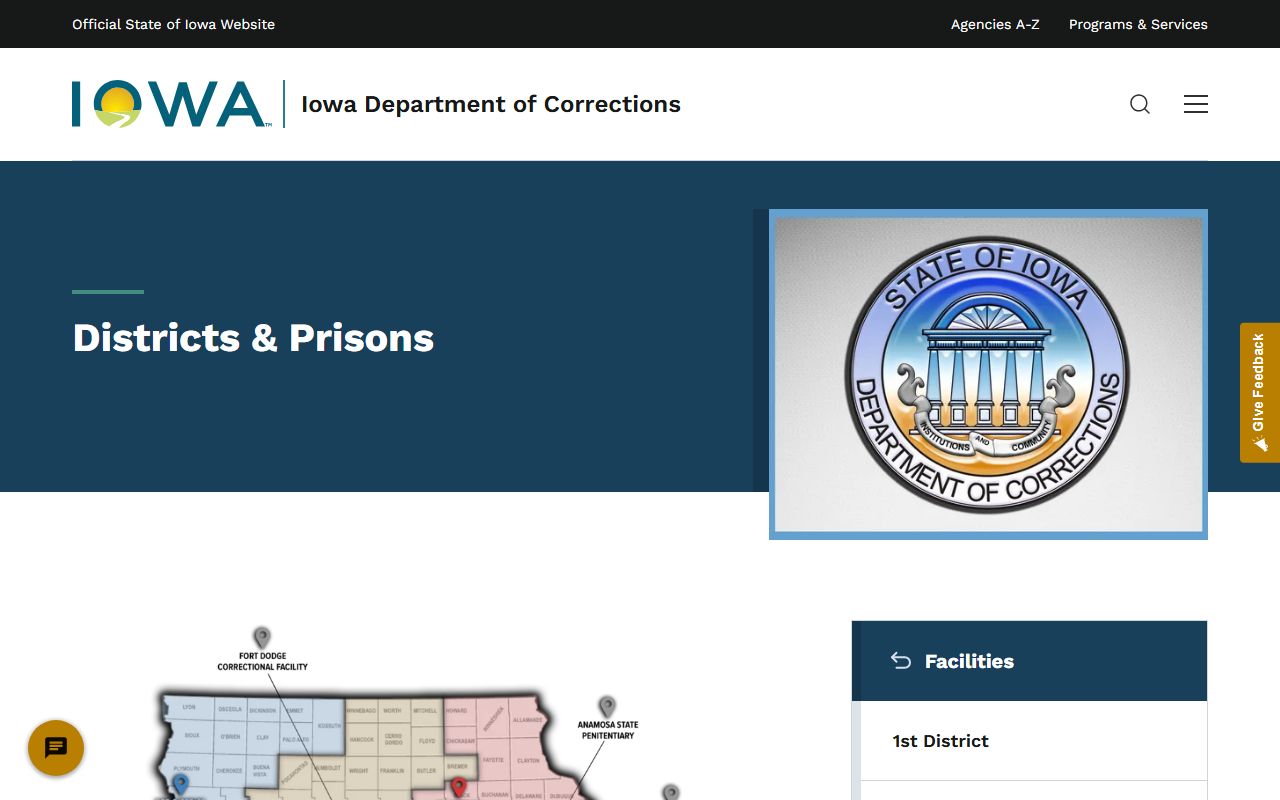
This statewide facility view helps separate a prison placement from a county jail booking, a community-based residential placement, or a parole/probation supervision record.
The district correctional services departments are based at Waterloo, Ames, Sioux City, Council Bluffs, Des Moines, Cedar Rapids, Davenport, and Fairfield. They handle community supervision and services such as parole supervision, presentence investigations, pretrial services, probation supervision, and residential correctional facilities. A person in one of those settings may not be a county jail inmate, even when the person is still visible through an IDOC or district record path.
Iowa Inmate Records Law
Iowa Code chapter 22 is the statewide public-records law. Section 22.1 defines public records broadly for state, county, city, township, school, and other public bodies. Section 22.2 gives every person the right to examine, copy, publish, or disseminate a public record unless another law says otherwise. For IDOC-specific offender and client information, Iowa Code section 904.602 is the key statute. IDOC's open-records page says only the public information listed in that section may be released for current or former incarcerated individuals and clients unless a release, subpoena, or court order applies.
Key Iowa records rules:
Iowa Code chapter 22 is the public-records framework for state and local public bodies.
Iowa Code section 904.602 controls public and confidential information for IDOC and district department clients.
Iowa Code section 356.36 sits in the county jail law and inspection framework noted in the research.
County jail records are requested through the lawful custodian for the county sheriff or jail. IDOC records use the IDOC process. Court records use Iowa Courts Online or Judicial Branch channels. Federal records go through federal agencies and FOIA. The right record path depends on who created and holds the record.
Search the Iowa Inmate Population
An Iowa inmate search should start with custody status. A person arrested today usually starts in a county jail or holding facility, so the first public search point is often a sheriff roster, jail contact page, jail phone line, or Chapter 22 request. A person sentenced to state prison, released to parole, placed on probation, or moved into an IDOC residential or work-release setting is more likely to appear through the IDOC Offender Search. Federal and immigration custody use separate national systems.
- For a recent arrest, identify the county that booked or holds the person and use the county jail roster or contact channel.
- For a sentenced state-prison case, use the IDOC Iowa Offender Search.
- For charges, case numbers, hearings, and dispositions, search Iowa Courts Online after court filing.
- For federal sentenced custody, use the BOP locator. For immigration detention, use ICE ODLS.
- For custody-status alerts, use Iowa VINELink where the agency and record participate.
The official Iowa Offender Search is the statewide IDOC inmate locator for state custody and supervision records.
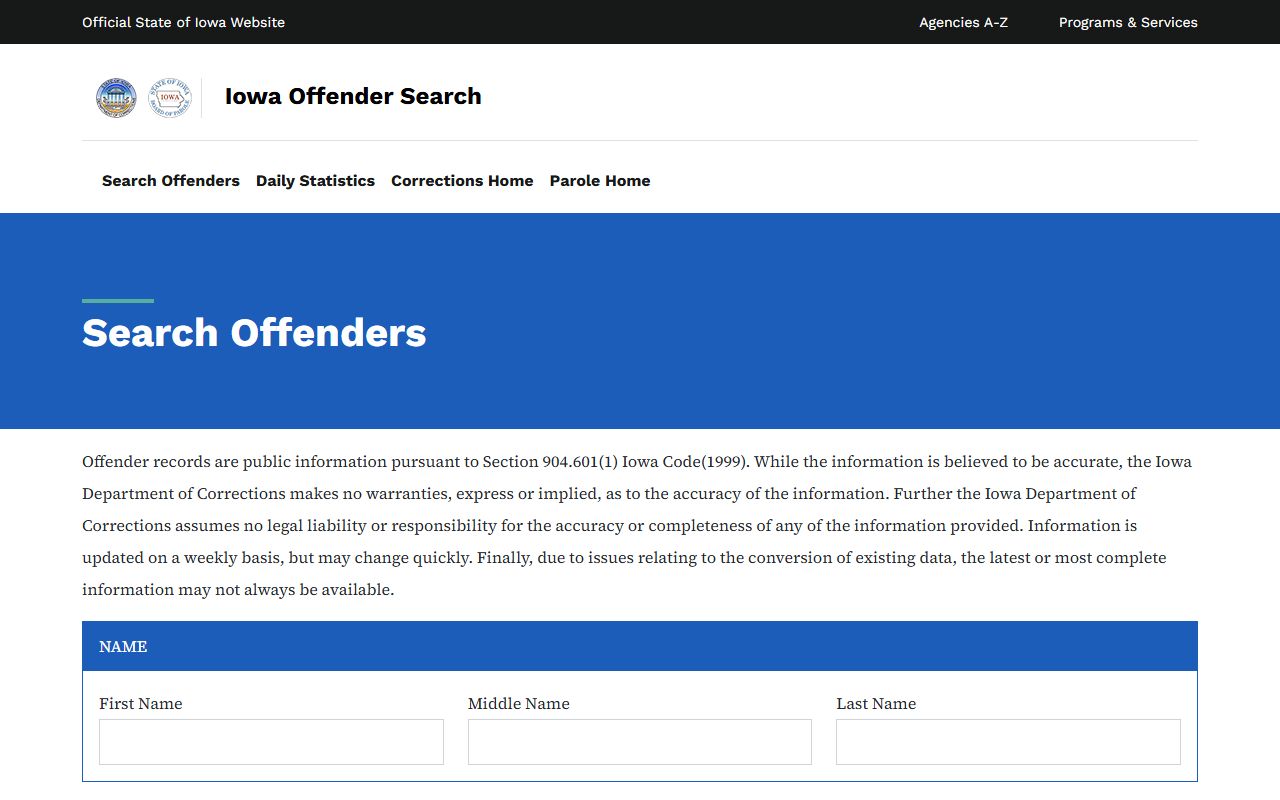
The locator belongs to the state prison and supervision layer, so a missing result can simply mean the person is still in county jail, under a different spelling, in federal or ICE custody, or not yet updated into the IDOC index.
Iowa Inmate Search Fields
The IDOC search form supports several search fields and name-matching options. The visible fields in the research are First Name, Middle Name, Last Name, Offender Number, Sex, Location, Offense, and County of Commitment. Name-search behavior includes Starts With, Matches, and Sounds Like. Location can include all nine prisons, community corrections compact or interstate compact, and the eight judicial districts.
| Field | Best Use | Caution |
|---|---|---|
| Last Name / First Name | Start broad, then add a first name for common names. | Use Sounds Like or Starts With when spelling is uncertain. |
| Offender Number | Use when an IDOC number is known. | It is not the same as a county booking number or BOP register number. |
| Location | Narrow by prison, district, compact status, or supervision location. | Over-filtering can hide a match. |
| County of Commitment | Connects a state case to the Iowa county of commitment. | It does not mean the person is still in that county jail. |
IDOC states that offender records are public information and that information is believed accurate but not warranted. The research also notes that the search page says information is updated weekly, yet status can change quickly.
County Jail or IDOC?
The main split in Iowa inmate population searches is local jail versus state prison or supervision. County jails hold pretrial detainees, people waiting for court, short local sentences, holds, and in some places federal or ICE detainees. IDOC institutions hold sentenced state prisoners after commitment and intake. District correctional services cover parole, probation, pretrial services, work release, and residential community-corrections settings.
| System | Who It Usually Covers | Where to Search |
|---|---|---|
| County jail | Recent arrests, pretrial custody, short sentences, local holds | County Directory and local roster/contact channels |
| IDOC prison | Sentenced state-prison custody | IDOC inmate population page and Iowa Offender Search |
| District corrections | Parole, probation, pretrial services, work release, residential corrections | IDOC search and district contacts |
| Federal or ICE custody | Federal sentenced inmates or immigration detainees | BOP locator or ICE ODLS |
State and Federal Search
The Federal Bureau of Prisons locator applies to federal inmates incarcerated from 1982 to the present. It searches by BOP Register Number, DCDC Number, FBI Number, INS Number, or by name with race, age, and sex fields. The research did not find a BOP institution physically in Iowa, but Iowa residents and federal defendants can be in BOP facilities outside Iowa, and some county jails may hold federal pretrial detainees under local arrangements.
The Federal Bureau of Prisons inmate locator is the correct search path for federal sentenced custody rather than Iowa county jail or IDOC prison custody.
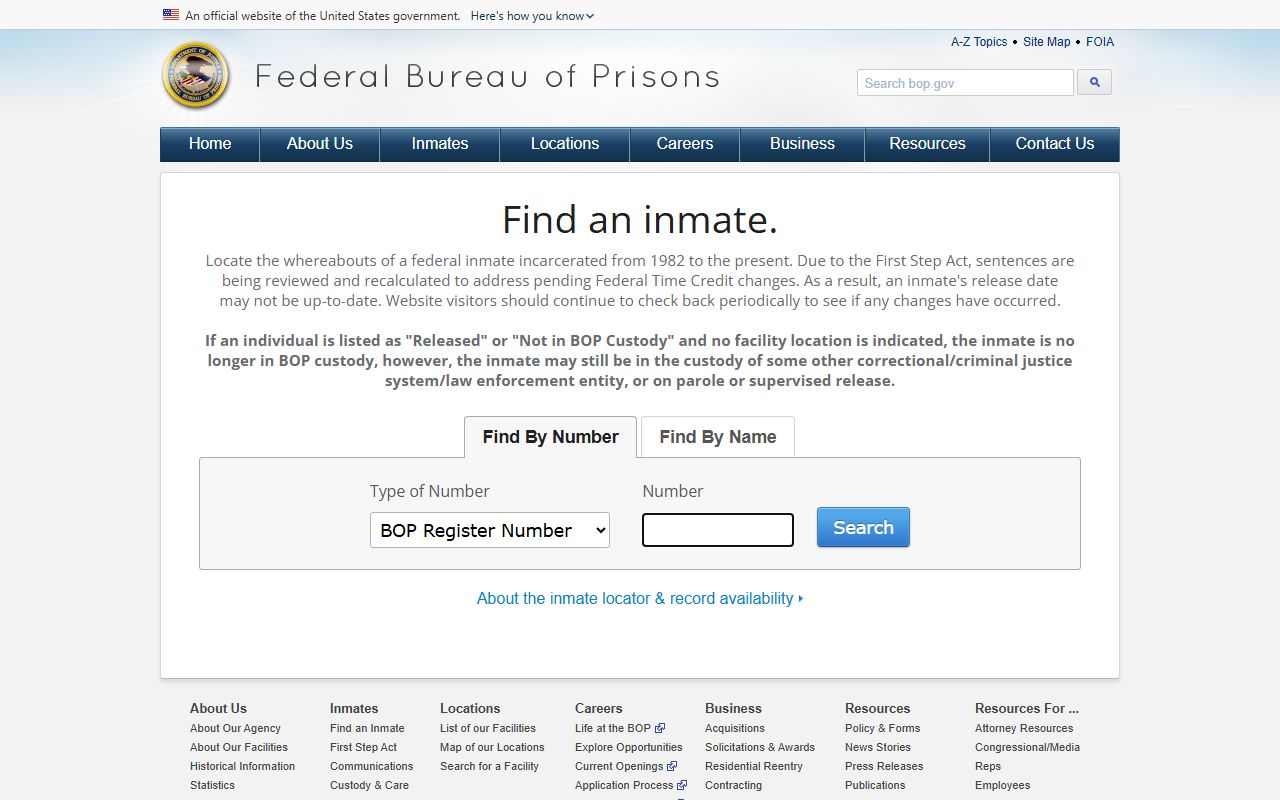
BOP also warns that federal sentence reviews can affect release-date accuracy, so a federal locator result should not be read as a county jail or IDOC release guarantee.
ICE ODLS is relevant when a person is in immigration detention or has been transferred from a county jail after a criminal case, hold, or release. Iowa ICE facility profiles found in the research include Polk County Jail, Pottawattamie County Jail, Sioux County Jail, and Muscatine County Jail. Those facilities are covered by existing Iowa county folders, so statewide routing should point through the county and ICE paths rather than inventing an uncovered facility page.
Iowa Courts and VINE
Jail and prison records do not replace court records. A booking can show custody, charges listed by the jail, bond information, and local status, but Iowa Courts Online is the statewide public portal for court case information after filing. Court records can show case numbers, filings, dispositions, court debt, hearing history, and other public case details. When the question is what charges were filed after an arrest, the court path is usually more useful than the roster alone.
The Iowa Judicial Branch search-court-records guidance explains the state court-record search path that complements jail and IDOC searches.
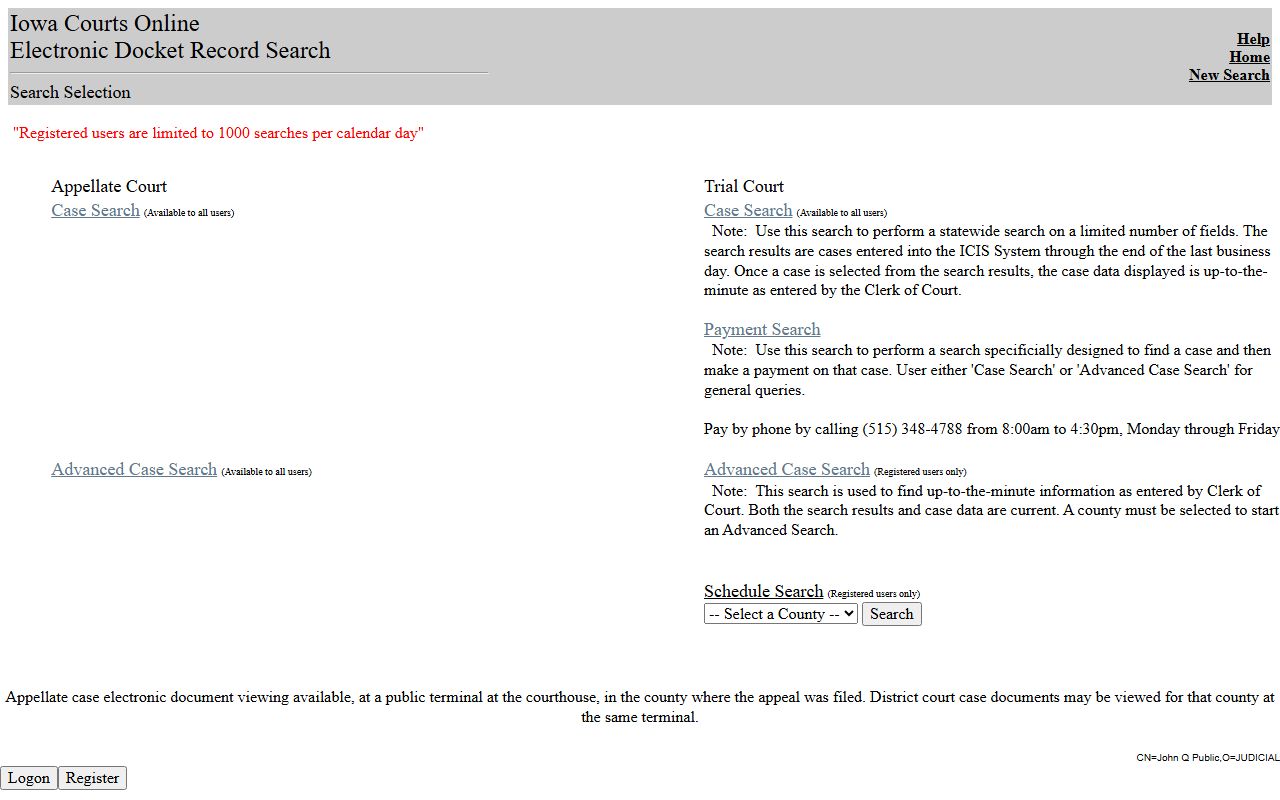
Court search is most helpful once a case has been filed, while a very recent booking may still require the county roster or jail contact channel.
Iowa VINELink is a notification and custody-status support channel. It is not a complete public jail roster and it is not a court-record portal. It can help with custody-status alerts where the agency participates and the record is available.
The Iowa VINELink entry point is the statewide VINE access point documented in the research.
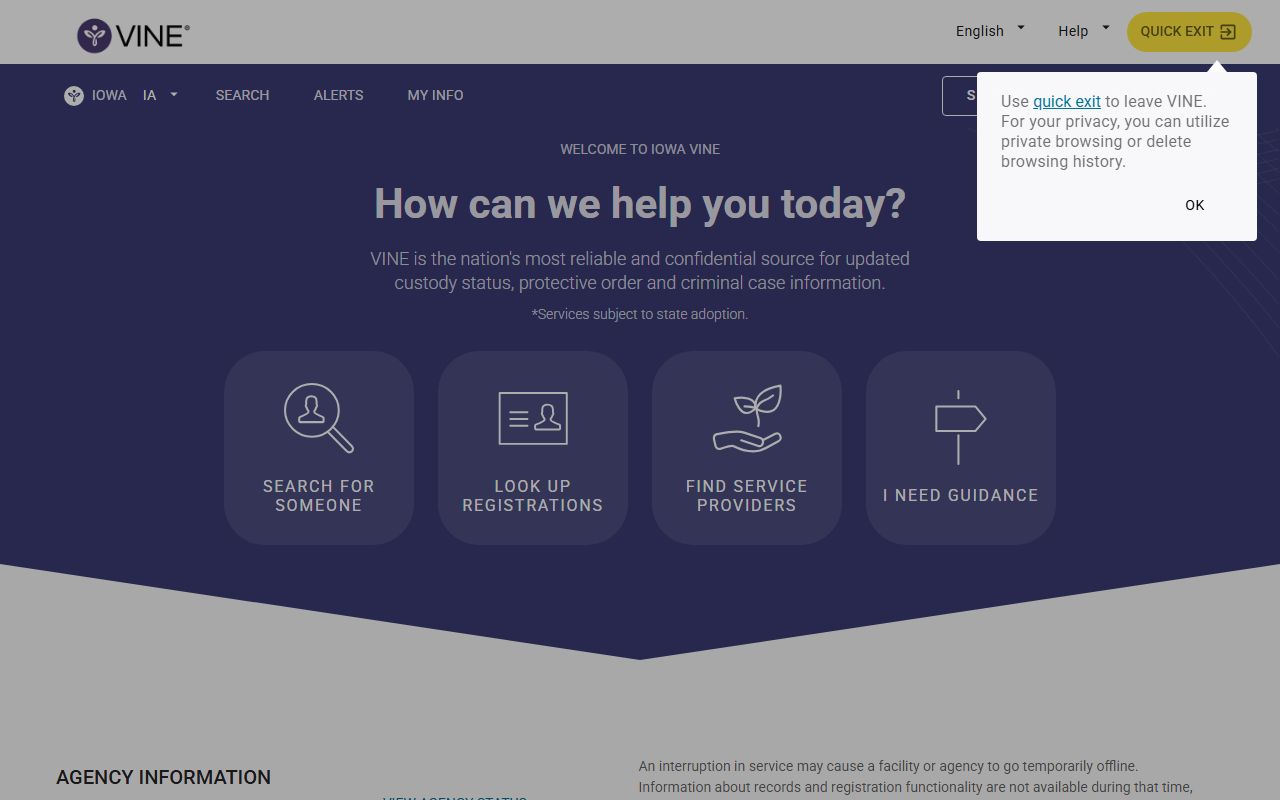
VINELink works best as an alert tool alongside county, court, IDOC, BOP, and ICE searches, not as the only source for the Iowa inmate population.
Iowa Records Requests
IDOC records requests are handled through the agency's open-records process under Iowa Code chapter 22 and Iowa Code section 904.602. IDOC requests submission through the State Information & Public Record Requests site so requests can be received, handled, billed, and answered, but the research says IDOC also accepts email, phone, or written requests. IDOC asks requesters to be specific with search terms, keywords, and date ranges and states that it is not required to create a record that does not already exist, conduct research, analyze data, or answer questions.
The IDOC Open Records Request page is the official source for Iowa Department of Corrections records-request mechanics, fees, and timing.
The open-records path is different from a live locator search. Use it when the needed record is not available from the public locator or when a formal records request is required.
IDOC provides the first 30 minutes of staff time at no charge, charges actual hourly rates after that, charges $0.15 per physical photocopy page, and may require prepayment if the estimate exceeds $25. The research says requesters should receive a response within 10 business days, while Iowa Code allows up to 20 calendar days to determine availability when confidential records or information may be involved.
Iowa Detention Facilities
The statewide facility roll-up confirms that every Iowa county has a sibling folder and each has a research file. That means the county directory can route to all 99 counties, and the facility directory can distinguish county jails, law enforcement centers, correctional centers, state prisons, community-corrections residential facilities, work-release facilities, and juvenile detention facilities where the research identifies them.
Not every facility should be described with the same language. A county jail is not an IDOC prison. A state prison inside a county, such as Anamosa State Penitentiary, Iowa State Penitentiary, or Newton Correctional Facility, is not the county jail. A residential work-release facility may use client or resident language. Juvenile detention should be distinguished from adult public jail rosters because juvenile records are often confidential.
Iowa Inmate Population FAQ
How large is the Iowa inmate population?
The sourced statewide prison count is 8,925 people in IDOC institutions as of 07/05/2026. That is not a statewide jail total. County jail populations are local and must be checked through county rosters, sheriff contacts, or county records requests.
Why can a person be missing from IDOC search?
A missing IDOC result can mean the person is still in county jail, is not under IDOC custody or supervision, has not appeared in the weekly update, is indexed under a different spelling, or is in federal or immigration custody.
Does Iowa have one statewide jail roster?
The research does not identify one statewide county-jail roster. Iowa's jail layer is decentralized, with each county using its own roster, PDF, portal, contact path, or Chapter 22 request process.
Where are Iowa court records after arrest?
Iowa Courts Online is the statewide path for public case information after charges are filed. It complements jail rosters because it focuses on court case records, not custody status alone.
Public Record Search
Sponsored Results