
Iowa Court Records After Arrest
A jail arrest and a court case are connected, but they are not the same record. The arrest starts with law enforcement and booking at a county jail or local holding facility. The court record begins after charges are filed in the Iowa court system. Local research repeatedly routes users from county jail searches to Iowa Courts Online when the question changes from "who is in custody" to "what charges were filed after arrest."
The booking side can show a name, booking date, local charge labels, bond information, facility, and sometimes a booking photo. The court side can show case numbers, filings, charge status, hearing history, dispositions, court debt, and other public case information. A jail roster may lag, and a court case may not appear until filing. That is why the arrest-to-court path should be checked in sequence.
The public search entry is Iowa Courts Online.
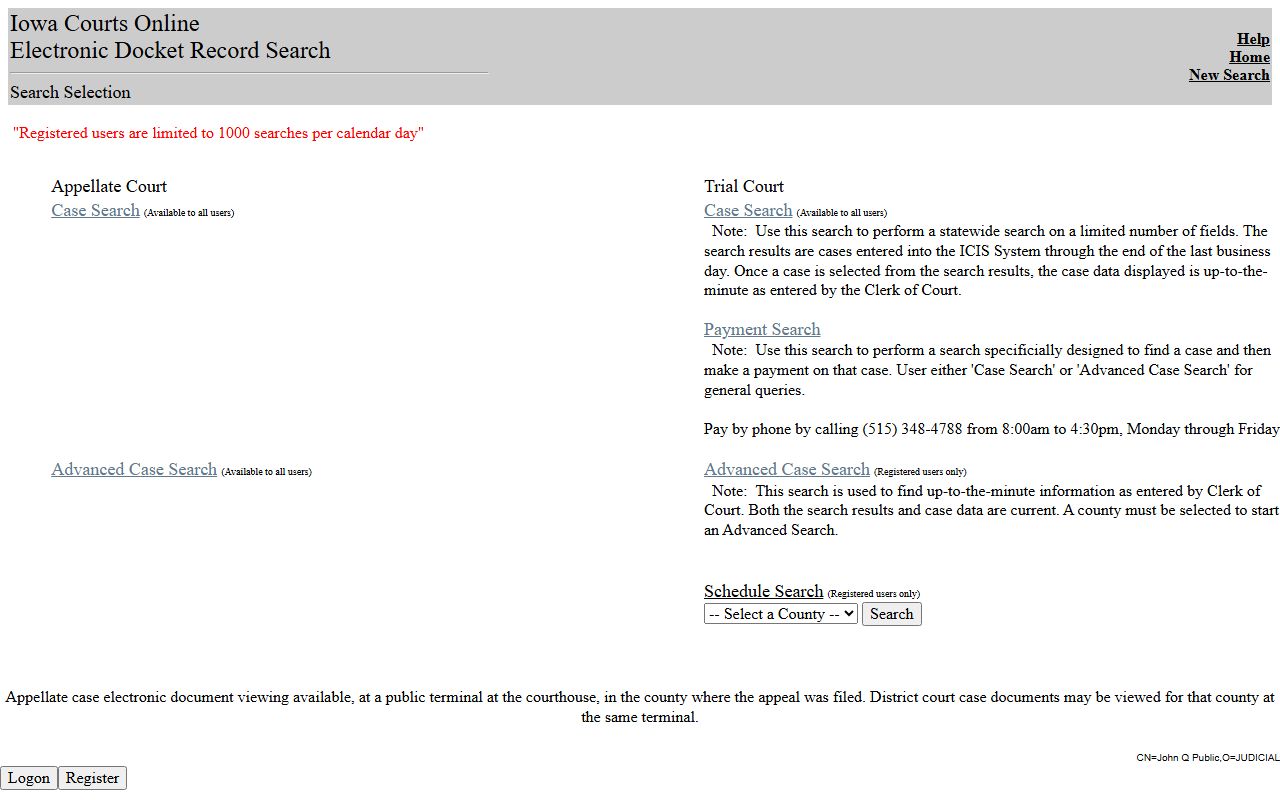
Iowa Courts Online is the statewide court-record source to use after the jail booking has become a filed criminal case.
Iowa Court Search System
Iowa's public statewide court-record access is routed through the Iowa Judicial Branch. The research identifies two official court sources: the Judicial Branch search-court-records guidance page and the Iowa Courts Online search entry point. The court portal is not a jail roster. It is the source for case information after filing, including charges, case numbers, filings, dispositions, court debt, and hearing history where public.
A county still matters. The arrest may happen in one place, the jail may hold the person locally or regionally, and the court case is tied to the county where charges are filed. The County Directory helps route custody questions to the right county site, while Iowa Courts Online handles the statewide case-search layer.
The Iowa Judicial Branch explains court-record searching at Search Court Records.
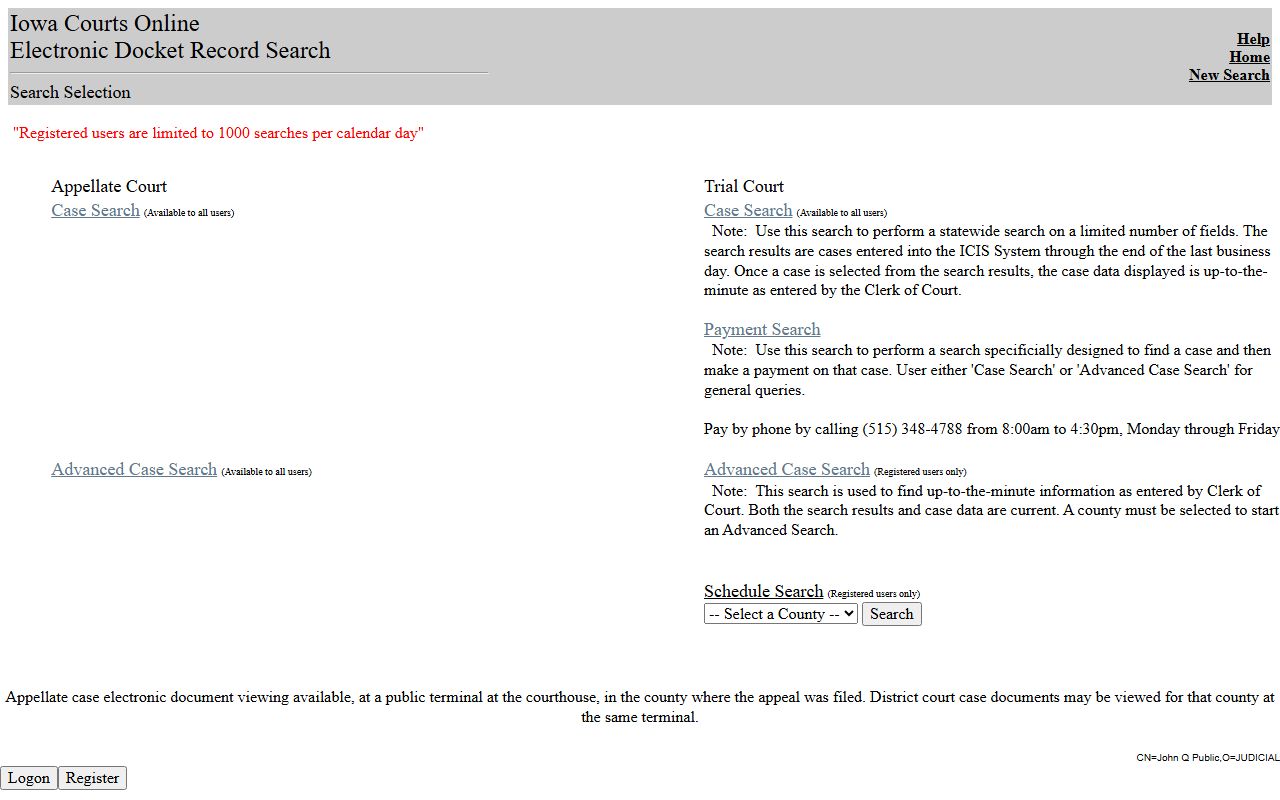
The Judicial Branch guidance is a better source for court access than a county jail roster when the question is about filed charges or case events.
Find Iowa Court Records After Arrest
The search works best when custody and case records are kept separate. Start with the county jail if the person was just arrested and custody status is unknown. Move to Iowa Courts Online for the filed criminal case. If the person has moved into state prison or community supervision, check IDOC Offender Search. For federal sentenced custody or immigration detention, BOP and ICE are separate systems.
- Identify the county tied to the arrest, booking, or prosecution. Use the county roster or sheriff contact path for active custody.
- Open Iowa Courts Online and search by defendant name or case number when available.
- Read the filed case information instead of relying only on the jail's booking-charge wording.
- Check charge status, hearing history, dispositions, and court debt fields where the public case record provides them.
- Use Iowa inmate records for custody status and Iowa jail mugshots for booking-photo questions.
Note: a no-result court search is not proof that no arrest occurred, because filing timing, spelling, restricted records, and county workflow can affect visibility.
Charges After Iowa Arrest
The research supports a simple statewide distinction: booking information comes from jail custody, while charges in a public case are found through the court system after filing. The court record may show the filed charging document and later changes. The exact public document access can depend on the portal, clerk process, public-terminal access, and whether a record is restricted by law.
| Record Stage | Where It Comes From | What to Check |
|---|---|---|
| Booking charge | County jail roster or sheriff record | Initial jail-side charge label, bond, booking date, and custody status. |
| Filed charge | Iowa Courts Online or clerk record | Case number, charge list, filed documents, and current court status where public. |
| Disposition | Court record | Dismissal, plea, conviction, sentence, or other outcome where public. |
The charging-document type may appear in the court file or clerk record, but the core access point for statewide public case information remains Iowa Courts Online.
Iowa Charge Status Terms
Charge status can change after a jail arrest. A roster may show the charge known at booking, while Iowa Courts Online tracks the filed case. The court record is the better place to verify whether a charge is pending, dismissed, resolved, or changed. A person can be arrested and charged without being convicted, so search results should be read as record status, not as proof of guilt.
| Status | Plain Meaning | Record Caution |
|---|---|---|
| Pending | The case or charge has not reached final disposition. | Check later hearing events and filings. |
| Changed or amended | The charge list or wording has changed after filing. | The jail roster may still show the earlier booking label. |
| Dismissed | The charge or case was not carried forward as filed. | Public visibility can still depend on court rules and record restrictions. |
| Disposed | The court record shows an outcome. | Read the disposition field, not just the arrest or booking entry. |
Arrest to Custody Flow
Iowa's statewide custody path normally starts locally. A sheriff, police department, Iowa State Patrol, or other agency arrests the person and the county jail or holding facility books them. Court-filed charges appear in Iowa Courts Online after filing. If the person is convicted and receives a state prison sentence, the person moves from county jail and court custody toward IDOC intake and classification. If the person receives probation, deferred judgment, suspended sentence, pretrial supervision, parole, work release, or residential placement, the relevant district correctional services department may become the main supervision contact.
Process: arrest -> county booking -> court filing -> case events -> disposition -> county release, IDOC custody, district supervision, federal custody, or another agency hold.
The Iowa Department of Corrections homepage connects the public to Find an Offender, facilities, victim services, open records, and agency reports.

IDOC becomes central after a qualifying state-custody or supervision event, not merely because a person was arrested in Iowa.
Charges vs Convictions
A charge is an accusation filed in a public case. A conviction is an outcome after a guilty plea, verdict, or other qualifying disposition. The research cautions that court records, jail records, IDOC records, BOP records, and ICE records each serve different functions. That distinction is critical for Iowa court records after a jail arrest because a booking entry can exist long before a case is resolved.
| Charge | Conviction | |
|---|---|---|
| Record point | Filed after arrest or listed at booking | Outcome shown after case resolution |
| Main source | Iowa Courts Online and county jail records | Iowa Courts Online, and IDOC if a state custody or supervision result follows |
| Custody meaning | May explain why someone was booked or held | May lead to sentence, supervision, or prison intake |
Restricted Iowa Arrest Records
Not every record tied to an arrest is fully public online. The research notes that court records may require clerk or public-terminal access for documents, and that juvenile arrests, sealed charges, dismissed charges withheld by law, and ongoing-investigation material can be restricted. Iowa Code chapter 22 gives broad public-record access, but it also operates subject to exceptions and lawful-custodian rules.
| Access Category | Public Effect | Where to Ask |
|---|---|---|
| Public case information | May appear in Iowa Courts Online after filing. | Iowa Courts Online or the clerk. |
| Restricted or sealed material | May not display in a public online search. | The court clerk or legal process tied to the case. |
| Jail custody record | May be on the county roster or available by Chapter 22 request. | The county sheriff or jail custodian. |
Iowa Public Records Rules
Iowa Code chapter 22 is the statewide public-records law. The research states that section 22.1 defines public records broadly for state and local public bodies, while section 22.2 gives every person the right to examine and copy public records unless otherwise provided by law. The lawful custodian matters. County jail records go to the county sheriff or jail custodian. Court records go through Iowa Courts Online, the Judicial Branch, or the clerk. IDOC records go through IDOC Open Records.
IDOC offender and district department client information is controlled by Iowa Code section 904.602. The research says public information may include name, age, sex, status, location except home street address, duration of supervision, offenses, county of commitment, arrest or detention orders, physical description, type of services received, and some disciplinary report or decision information. Confidential information requires a release, subpoena, or court order.
The IDOC open-records request page explains the Chapter 22 and 904.602 route for Department of Corrections records.
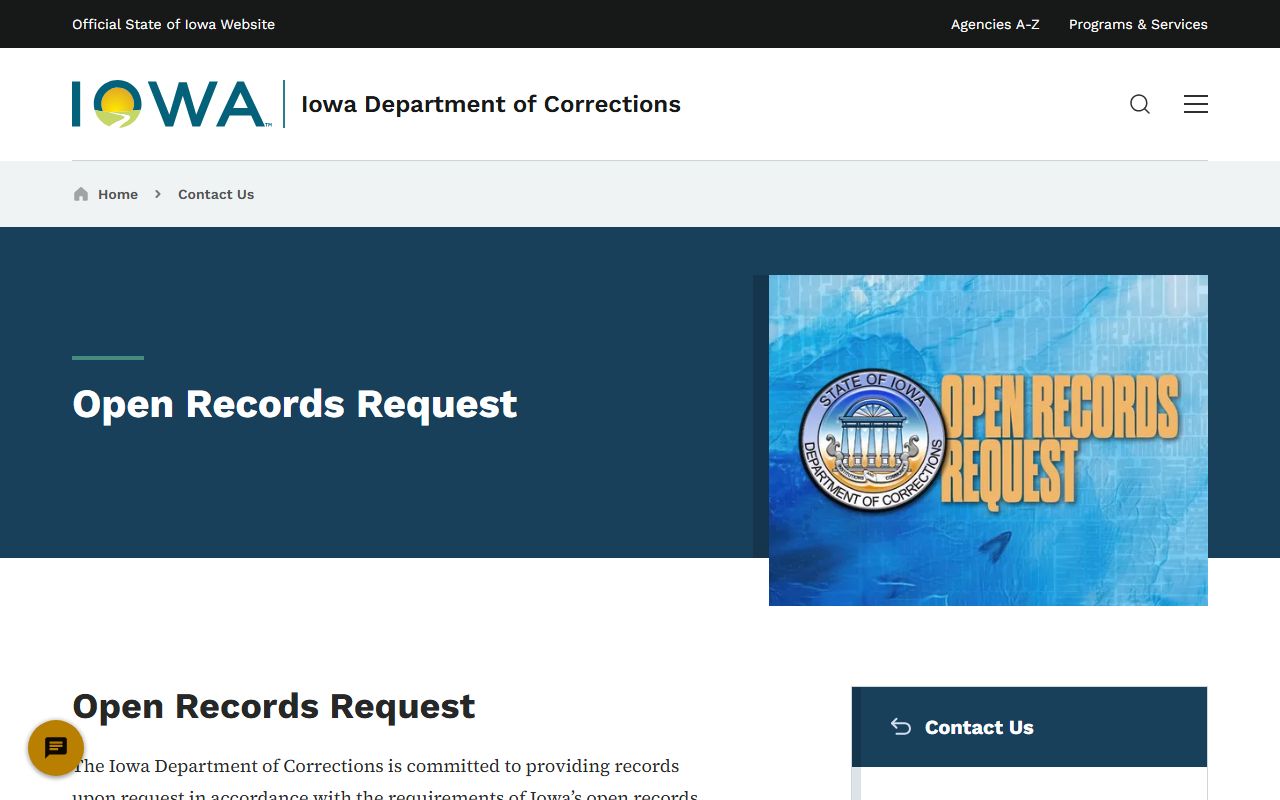
That IDOC request path is useful after a case has become a corrections record, while jail and court records still route to their own custodians.
Background Check Limits
Public court records after a jail arrest should not be treated as a consumer report. A casual lookup can help identify a filed case, charge status, court event, or custody route, but employment, housing, credit, insurance, and similar decisions are regulated uses. Official verification is also important because jail rosters, IDOC search, BOP data, ICE data, VINELink alerts, and court portals can update on different schedules.
Important: Do not use public arrest, jail, or court pages as a substitute for an FCRA-compliant consumer report.